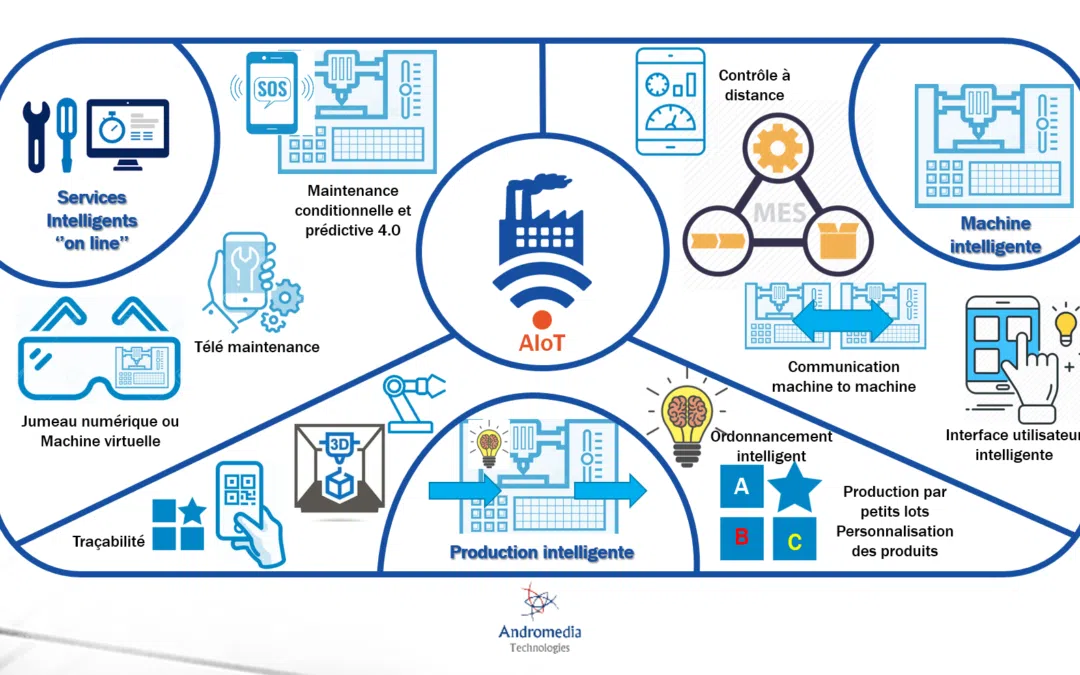
In an evolving industrial landscape, the smart factory has emerged as the defining innovation of Industry 4.0 — a new paradigm in which artificial intelligence, the Internet of Things, advanced robotics, and data analytics converge to create production environments that are more efficient, more flexible, and more responsive than anything previously possible. At the heart of this transformation, Siemens stands as one of the clearest examples of how these technologies can be deployed at scale, with concrete and measurable results. From its legendary Amberg electronics plant to its Nuremberg IoT projects, the German industrial conglomerate offers a live case study in what intelligent manufacturing looks like when ambition is matched by execution.
Artificial Intelligence and Process Optimisation
Siemens employs artificial intelligence across its manufacturing facilities to reshape traditional production approaches in fundamental ways. In its Amberg plant — widely regarded as one of the most advanced electronics factories in the world — the company integrated programmable logic controllers with machine learning capabilities enabling real-time monitoring of machine performance across the entire production floor. By continuously analysing the data streams generated by every piece of equipment, the system predicts potential failures before they manifest as breakdowns, enabling maintenance teams to intervene precisely when needed rather than on a fixed schedule or after the fact.
The results are striking: this approach has achieved a 20% reduction in downtime at the Amberg facility, translating into significant savings on operational costs and a corresponding improvement in overall equipment effectiveness. The plant now produces programmable logic controllers with a defect rate of fewer than 12 parts per million — an extraordinary figure that illustrates what AI-assisted quality management can achieve when embedded throughout the production process rather than applied only at the end of the line.
Siemens has also been an early and consistent adopter of additive manufacturing — 3D printing for industrial applications — which enables the creation of custom, lightweight components while significantly reducing material waste. According to assessments from the Fraunhofer Institute, additive manufacturing could reduce production costs by up to 30% by 2025 for organisations that integrate it effectively into their manufacturing workflows. Siemens is already realising a significant portion of these savings across its production network.
Horizontal Integration through the Industrial IoT
The Industrial Internet of Things plays a central role in Siemens's Industry 4.0 strategy, enabling the horizontal integration of machines, systems, and data flows that transforms a collection of individual production assets into a coherent, responsive manufacturing network. Rather than each machine operating as an isolated unit with its own data silo, Siemens's connected factory approach positions every machine as a data point contributing to a shared operational intelligence platform.
In 2023, Siemens launched a major IoT integration project at its Nuremberg facility, equipping machines with sensors that transmit real-time product quality data throughout the production process. This continuous data stream enables immediate error detection and correction — catching defects at the point of origin rather than at final inspection, when rectification is far more expensive. Predictive analytics tools analyse these data flows to anticipate production rates and adjust processes dynamically to meet changing demand patterns.
The operational benefits are substantial. Siemens reports that factories implementing this horizontal integration approach have achieved up to 15% growth in annual production — not through additional capital investment in capacity, but through the optimisation of existing resources enabled by better data and faster decision-making. This kind of efficiency gain, achieved without proportional cost increases, represents a fundamental change in the economics of manufacturing.
Strategies for Transitioning to Industry 4.0
Siemens's experience offers practical guidance for manufacturers at earlier stages of their Industry 4.0 journey. The company's approach to digital transformation — internally and in the advisory services it offers to its industrial customers — emphasises several principles that have proven critical to successful transitions.
The first is the importance of a comprehensive process review before deploying new technology. Understanding current weaknesses and bottlenecks establishes clear priorities for digital investment, preventing the common failure mode of deploying sophisticated technology against poorly understood problems. Transformation initiatives that skip this diagnostic phase typically achieve fragmented results and struggle to demonstrate return on investment.
The second is the centrality of workforce engagement. Siemens's experience demonstrates that continuous training programmes and active involvement of shop-floor employees in the transition process are not peripheral concerns — they are determinants of success. Technology adoption rates and the quality of operational insights generated by connected systems both improve dramatically when the people working with them understand the tools and feel invested in their success. Internal skills development programmes at Siemens contributed directly to measurable productivity increases across its facilities.
The third principle is the value of iterative, measurement-driven implementation. Rather than attempting a wholesale transformation in a single programme, Siemens advocates for agile systems that allow continuous performance evaluation and strategy adaptation as technologies evolve and market conditions change. In Uruguay, a gradual scaling of data analytics tools produced positive returns in less than two years — illustrating how phased implementation reduces risk while allowing organisations to build capability and confidence progressively.
For manufacturers considering their own smart factory transitions, Siemens's journey offers both inspiration and a practical template: clear strategic intent, rigorous measurement, sustained workforce investment, and a willingness to iterate based on what the data reveals.