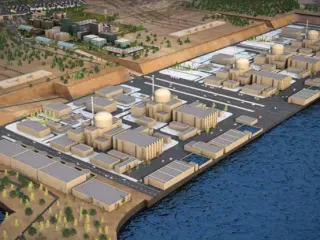
France's nuclear revival programme represents one of the most ambitious industrial undertakings in modern European history. After years of delays and cost overruns at the Flamanville EPR construction site — which became a cautionary tale for the global nuclear industry — EDF is determined to demonstrate that France can once again build nuclear reactors on time and on budget. The EPR2 programme, with its promise of completion in just 70 months, is the vehicle for that ambition. It is a project that carries both immense industrial complexity and profound strategic significance for France's energy sovereignty and climate commitments.
The challenge of building EPR2 reactors in record time
In 2021, there were initial estimates for the construction of the EPR2 nuclear reactors, with a projected cost of around 52 billion euros. Today, this figure has reached 70 billion euros, not including financial costs. Luc Rémont, the CEO of EDF, highlighted the crucial need to accelerate construction speed during a session at the National Assembly. His goal: to complete these reactors in 70 months — or less than six years between the first poured concrete and their industrial commissioning — a significant challenge considering the group's past experience with the EPR at Flamanville.
The EDF project aims to renew the approach by streamlining construction. In just 70 months, the company hopes to overcome the obstacles of previous reactors and demonstrate its ability to meet deadlines. Drawing on accumulated experience and lessons learned from the Flamanville site, the group is undertaking ambitious measures: the industrialisation of the construction process and the standardisation of components to save time and optimise costs are central to this new approach, which treats nuclear construction as an industrial programme with repeatable sequences rather than a one-off engineering project.
Strategic adaptation and innovations
To achieve the set goal, EDF adopts a strategy of constant adaptation and innovation. The group plans to build the reactors in pairs with a simplified design, which reduces initial complexities. By working closely with its suppliers — particularly within the Excell plan — and investing in its subsidiaries Framatome and Arabelle Solutions, EDF ensures efficient serial production. Thanks to this model, inspired by defence and space programmes, EDF hopes for a significant acceleration in the construction process. The EPR2 is thus designed to be the worthy successor of the EPR at Flamanville, but with a faster and more economical construction.
The simplification of the EPR2 design compared to its predecessor is deliberate and systematic: fewer safety systems, but more robust individual systems; standardised components that can be manufactured in volume rather than bespoke; and a construction sequence designed for parallel execution rather than sequential dependencies. Each of these choices reflects lessons learned directly from the delays and cost overruns that plagued earlier nuclear construction projects in France, Finland, and the United Kingdom.
The crucial role of the inter-professional delegation and experts
In November 2022, the government established an inter-professional delegation dedicated to new nuclear, led by Joël Barre, to oversee the programme. Its role is crucial to ensure that projects proceed under optimal conditions. Recommendations from the review conducted by about fifteen experts — who examined the project from March 2023 to July 2024 — prompted EDF to adjust its approach. Among these recommendations, greater anticipation of regulation and clarification of financing were emphasised as critical prerequisites for meeting the ambitious schedule.
The regulatory environment represents one of the most significant variables in nuclear construction timelines. EDF's strategy involves working proactively with the Autorité de Sûreté Nucléaire to anticipate regulatory requirements and resolve design questions well before they become on-site delays. This front-loaded approach to regulatory engagement, combined with the industrial and financial discipline that the new programme demands, gives the 70-month target its best possible chance of achievement — and with it, France's best possible chance of restoring its position as a world leader in civilian nuclear energy.