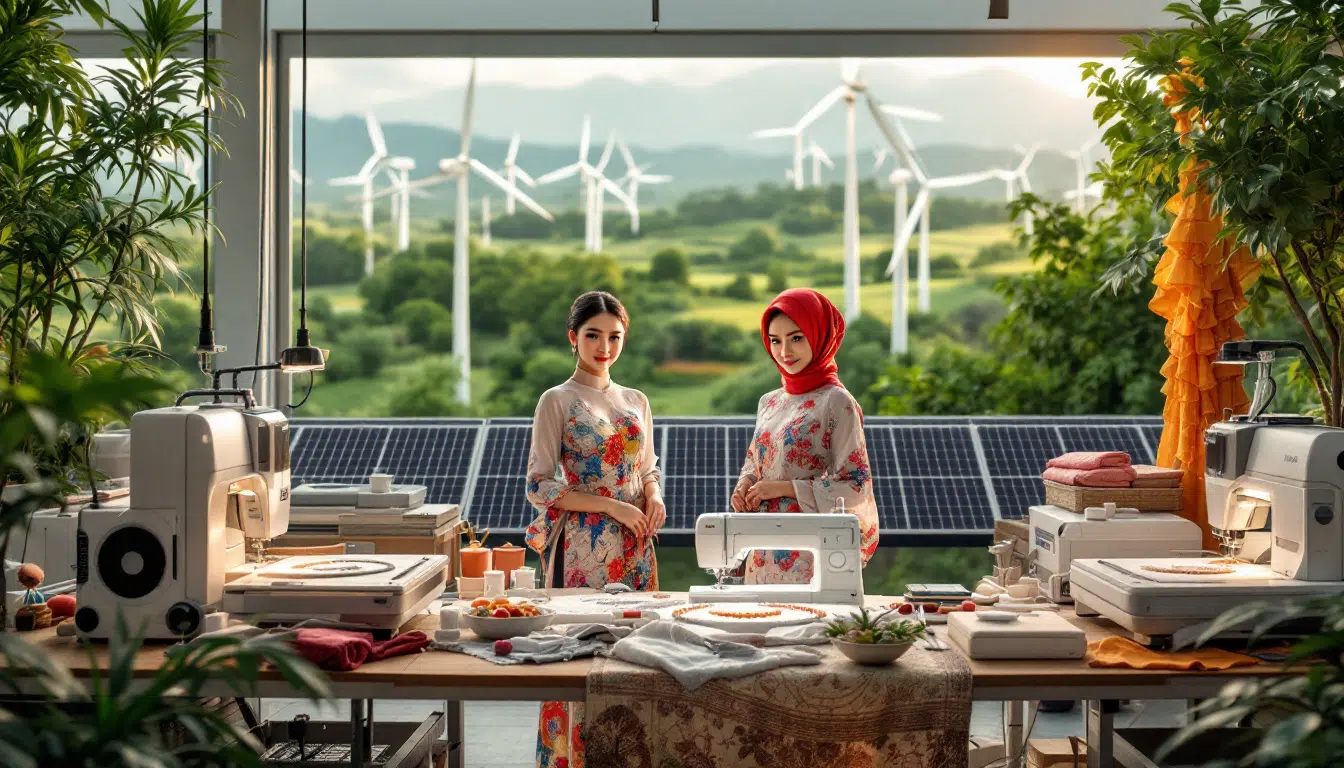
Indonesia occupies a unique position in the global fashion and textile economy. As the world's fourth most populous country and one of Southeast Asia's largest manufacturing bases, it has long been a key player in the production of garments, textiles, and footwear for international brands. But a new phase is underway — one defined not merely by low-cost production, but by the intelligent integration of Industry 4.0 technologies into the country's industrial fabric, combined with a strategic pivot toward sustainability that increasingly shapes consumer expectations and regulatory requirements worldwide.
The Rise of Indonesian Fashion in the Era of Industry 4.0
Indonesia's fashion manufacturing sector is undergoing a technology-driven transformation. Leading manufacturers are integrating IoT sensors, artificial intelligence, and automated systems into their production processes — delivering improvements in quality consistency, resource efficiency, and the ability to respond rapidly to changing orders and specifications. Tereos Indonesia has become one of the most cited examples of this transition, having received the prestigious INDI 4.0 award in recognition of its commitment to integrating innovative Industry 4.0 technologies into its production operations.
AI-enabled inventory management and demand forecasting have proven particularly valuable in a sector where the ability to anticipate market shifts and manage stock levels efficiently can determine the difference between profitable and loss-making operations. Perhaps most significantly, Industry 4.0 tools enable mass customisation at scale — allowing manufacturers to produce tailored products that meet the increasingly specific requirements of international clients without sacrificing the cost efficiency that defines Indonesia's competitive positioning.
Advantages, Challenges, and the Role of Government
Indonesia's production advantages are substantial. The country benefits from an abundant and relatively cost-competitive workforce, a strategic location at the heart of Southeast Asian trade routes, and a growing domestic market that provides a stable foundation for manufacturers seeking to balance export dependence with local demand. Textile exports surpassed 10 billion USD in 2021 — a figure that reflects both the sector's scale and its potential for continued growth as global demand for sustainably produced garments rises.
Yet significant challenges remain. Ensuring consistent product quality requires ongoing investment in supplier selection, quality control protocols, and process standardisation. Logistics infrastructure, while improving, continues to create friction in the movement of goods from production facilities to international export hubs. Perhaps most critically, the adoption of Industry 4.0 technologies by SMEs — which represent the majority of Indonesia's textile and garment producers — faces persistent barriers in the form of resource constraints, skills gaps, and difficulty accessing financing for technology investment. Recognising these challenges, the Indonesian government launched the "Making Indonesia 4.0" strategy in 2018, proposing ten national strategies to revitalise manufacturing across five priority sectors including fashion and textiles. The strategy targets Indonesia becoming a top-ten global economy by 2030, with public-private partnerships — such as the collaboration between PT Jababeka and President University — fostering innovation ecosystems that help SMEs access the tools and expertise they need to participate in the digital transition.
Integrating Sustainability into the Supply Chain
Sustainability has moved from a peripheral concern to a strategic imperative for Indonesian fashion manufacturers. Companies are integrating sustainable practices across their supply chains — adopting recycled materials, eco-friendly dyeing and finishing processes, and energy-efficient production systems that reduce carbon footprints and meet the increasingly stringent environmental requirements of international buyers, particularly in the European and North American markets.
Industry 4.0 technologies play a direct enabling role in this sustainability agenda. Blockchain-based traceability systems allow manufacturers to verify and communicate the origins of their materials and the conditions of their production processes to buyers and consumers — creating the transparency that sustainable fashion increasingly demands. Automated systems optimise material use and reduce waste at the cutting and assembly stages, while AI-driven energy management platforms identify opportunities to reduce consumption across production facilities. The combination of digital capability and sustainability commitment is rapidly becoming the defining characteristic of Indonesia's most competitive fashion manufacturers — and the template for the broader industrial transformation that the country's "Making Indonesia 4.0" strategy envisions.