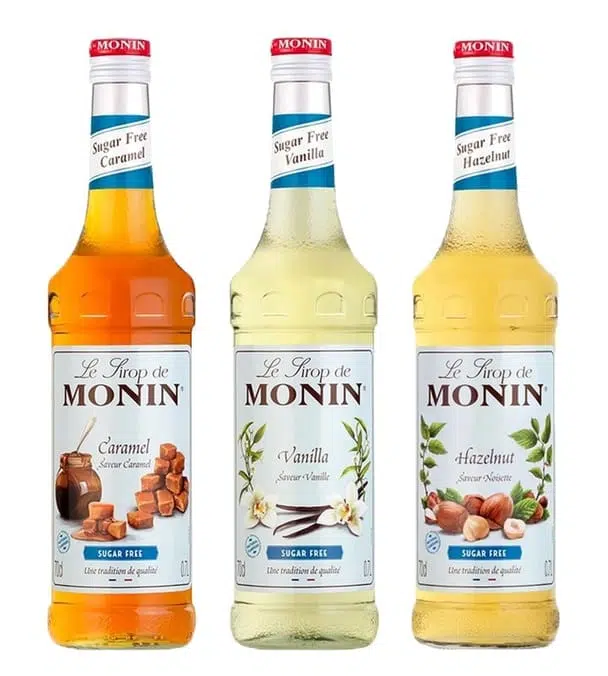
Established in 1912 in Bourges by Georges Monin, the company that bears his name has grown from a small French liqueur producer into one of the world's most recognised flavour specialists. Today, Monin offers syrups, concentrates, liqueurs, and fruit-based preparations or sauces across more than 150 countries, generating €600 million in revenue in 2023. Of that figure, more than 75% comes from international markets — a testament to the success of a global expansion strategy built around proximity to customers and deep adaptation to local tastes.
An Impressive International Manufacturing Footprint
Monin's internationalisation began in earnest during the 1990s. The company constructed its first overseas manufacturing facility in the United States in 1996, recognising that being close to major markets was essential both for supply chain efficiency and for product freshness. That first step has since evolved into a global network of production sites: Monin currently operates six factories across France, the United States, Malaysia, and China, with two additional facilities under active construction in Brazil and India.
Once these two plants come online, Monin will operate from eight manufacturing locations spread across four continents — a footprint that gives the company the logistical reach to serve virtually any market in the world with competitive lead times and without the quality compromises that long-distance shipping can impose on flavour products. The Brazil and India plants are strategically positioned to strengthen supply chains to their respective regional markets, where demand for premium flavoured beverages and culinary preparations has been growing rapidly.
Products Tailored to Local Markets
What distinguishes Monin's globalisation model from a simple export strategy is its commitment to local adaptation. The company does not simply produce a standardised product range and ship it worldwide — it actively tailors its portfolio to the cultural and culinary preferences of each market it serves. The result is a catalogue of 170 product variations, each designed with specific regional tastes in mind.
In the United States, pumpkin-flavoured syrups — aligned with the country's deep-rooted autumn seasonal culture — are among the most popular offerings. In Asian markets, cherry blossom and other florally inspired flavours resonate strongly with local preferences and seasonal traditions. This ability to localise without compromising the brand's core identity of quality and innovation is one of the key drivers of Monin's sustained international success.
Supporting this local adaptation strategy is a network of 100 Monin Studios located worldwide. These facilities serve as creative and development hubs where Monin collaborates directly with foodservice professionals — baristas, mixologists, pastry chefs, and culinary innovators — to develop localised beverage and recipe concepts. By embedding its expertise directly into the creative workflows of its customers, Monin reinforces both loyalty and relevance across every market in which it operates.
Innovation at the Heart of Monin's Strategy
Monin's continued competitiveness in an increasingly crowded global flavour market rests on its ability to innovate continuously — both in its product formulations and in its manufacturing processes. The company has invested significantly in diversifying its product lines through subsidiaries, expanding beyond its traditional syrups business into complementary categories such as fruit purées, cocktail mixers, and culinary sauces.
This diversification strategy allows Monin to serve a broader spectrum of foodservice operators, from high-volume coffee chains to fine dining establishments and premium cocktail bars. Combined with the company's responsiveness to emerging consumer trends — including the growing demand for natural, organic, and reduced-sugar formulations — Monin has consistently managed to stay ahead of shifts in the market while maintaining the quality standards that have built its reputation over more than a century.
As it approaches its eighth factory and continues to deepen its presence in high-growth markets across Latin America and South Asia, Monin stands as a compelling example of how a family-owned French food company can achieve genuine global scale without losing the craftsmanship and attention to local nuance that defines its brand.