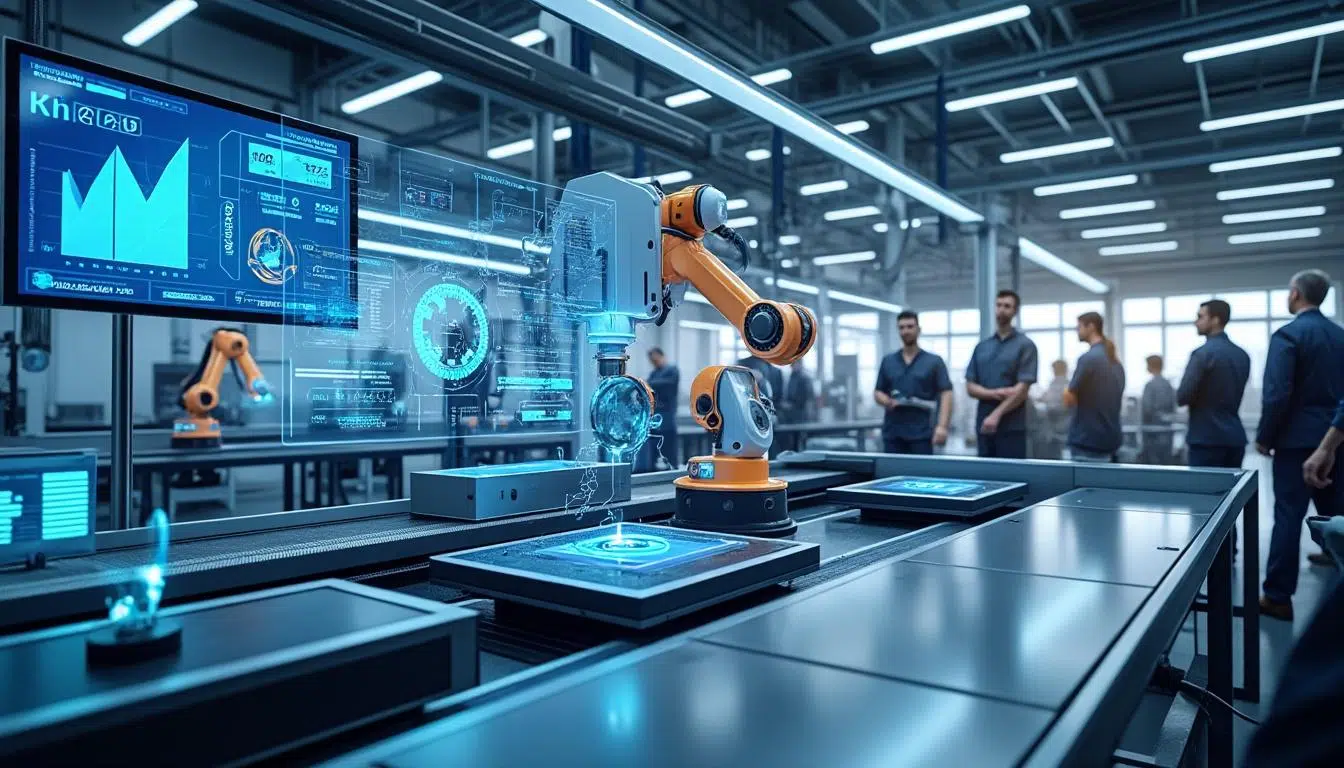
In the competitive landscape of semiconductor companies targeting the industrial market, the ability to offer integrated hardware-software solutions — rather than standalone chips that customers must programme and connect themselves — is becoming a defining competitive advantage. NXP Semiconductors, one of the world's leading providers of processors for automotive and industrial applications, has recognised this imperative and acted on it decisively with the acquisition of Port GmbH, a German company with more than three decades of expertise in industrial communication protocol software. The deal represents a significant strategic step in NXP's ambition to become the go-to provider for industrial IoT edge computing.
Why NXP Chose to Acquire Port GmbH
Port GmbH, founded in 1990 in Halle (Saale), Germany, has spent over three decades building a leading position in industrial communication protocol software — the middleware that enables industrial devices from different manufacturers to communicate with each other reliably in production environments. Its expertise spans PROFINET, Ethernet/IP, EtherCAT, Modbus, POWERLINK, and CANopen — the principal protocols that govern communication across the vast majority of industrial automation installations worldwide. This protocol expertise is an essential ingredient in any credible industrial IoT solution, yet it represents exactly the kind of specialised software know-how that semiconductor companies have historically lacked.
The acquisition enables NXP to integrate this robust software capability directly into its processor chips, optimising data flow, simplifying system integration for industrial customers, and improving supply chain resilience — since a fully integrated hardware-software solution from a single provider reduces the complexity and the points of failure in an industrial system's design. By controlling the edge — the point at which industrial devices connect to the broader IoT network — NXP takes ownership of a crucial link in the industrial IoT value chain that was previously served by separate software vendors.
The GOAL Platform and Benefits for Industrial Customers
Port GmbH's flagship middleware platform, GOAL (Generic Open Abstraction Layer), provides unprecedented flexibility in supporting multiple industrial communication protocols simultaneously within a single hardware platform. This multi-protocol capability is especially valuable in industrial environments where equipment from different generations and different manufacturers must coexist and interoperate — a common reality in manufacturing facilities that have accumulated equipment over decades of incremental investment. The GOAL platform also provides compatibility with emerging technologies including Time-Sensitive Networking (TSN) and OPC-UA architecture — the standards that are increasingly defining the next generation of industrial communication infrastructure.
For NXP's industrial customers, the integration of Port GmbH's protocols into NXP's i.MX RT1180 and i.MX 94 processor families delivers concrete benefits: better edge data management, more informed real-time decision-making, simpler implementation processes that reduce time-to-market, and improved cybersecurity — addressing one of the primary concerns that industrial operators cite when evaluating IoT adoption. The combination enables greater operational agility, optimised data flows between industrial devices and cloud analytics platforms, and more effective predictive maintenance capabilities that can reduce downtime and extend equipment life.
Strategic Context and Industry 4.0 Outlook
The Port GmbH acquisition fits within a broader pattern of targeted acquisitions through which NXP has been systematically building its industrial and automotive technology portfolio. Recent transactions include Kinara, an American AI chip manufacturer specialising in edge computing inference, and TTTech Auto, a provider of safety systems for autonomous vehicles. Together, these acquisitions reflect NXP's strategy of differentiating its semiconductor offering through tight integration between hardware performance and software intelligence — enabling real-time data processing with security, reliability, and cross-system compatibility that standalone chips cannot provide.
The industrial IoT market in which NXP and Port GmbH are competing is experiencing explosive growth, with analysts projecting a compound annual growth rate of 19.4% through 2030 — driven by the accelerating adoption of smart manufacturing, predictive maintenance, and digital twin technologies across the global industrial base. NXP's integrated solutions are well positioned to capture a significant share of this growth, particularly as the trend toward "software-defined manufacturing" and "edge intelligence" — flexible, software-configurable production systems that can adapt rapidly to changing product requirements — creates demand for processors that combine high computing performance with native industrial communication capabilities. The acquisition of Port GmbH gives NXP a genuine and defensible competitive advantage in serving this demand: not just faster chips, but smarter systems that can be deployed immediately into the full complexity of modern industrial environments.