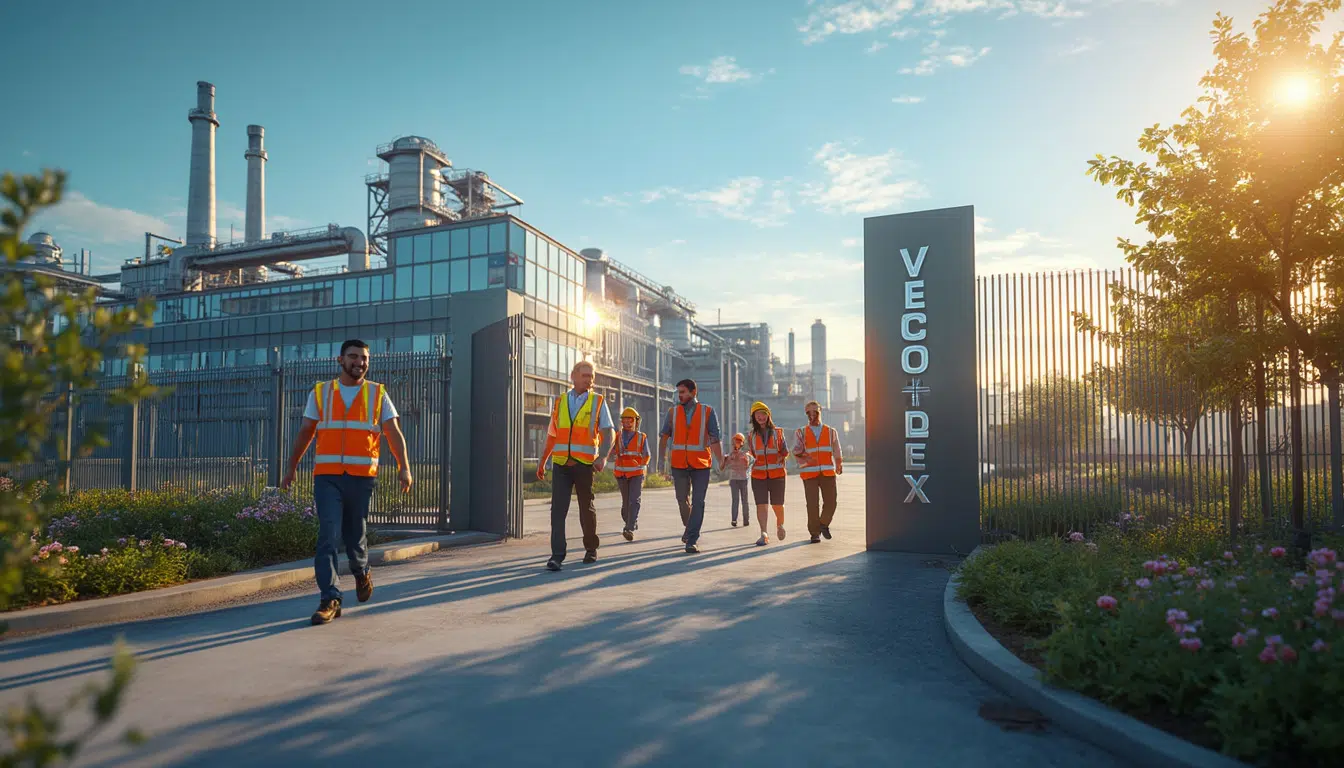
The Vencorex chemical site, positioned south of Grenoble in the Isère department, has reactivated after a two-month suspension caused by sustained strike action. All of Vencorex's union representatives endorsed an agreement with management that brings the blockade to an end, allowing operations to resume and — critically — enabling the reopening of the valves controlling the Transalpes ethylene pipeline, a vital piece of industrial infrastructure whose interruption had cascading consequences far beyond the Grenoble site itself. The resolution brings immediate relief to a network of downstream chemical producers that depend on the pipeline for their own production processes, while leaving deeper questions about the plant's viability and long-term future unresolved.
The Impact of the Blockade on the Chemical Industry
The Vencorex site occupies a strategic position in France's chemical supply chain. As a major producer and transit point for ethylene — one of the most widely used petrochemical feedstocks in industrial chemistry — the blockade of the site had an immediate and measurable impact on operations at multiple downstream facilities. Most significantly, the Ineos plant in Sarralbe, in the Moselle department of northeastern France, was forced to place approximately 200 workers on partial unemployment as ethylene supplies dried up — a stark illustration of the interconnected nature of modern chemical production networks and the systemic risks created when a single node is disrupted.
The Transalpes ethylene pipeline, which runs from the Mediterranean coast through southeastern France, had been effectively immobilised by the Vencorex dispute. Its reopening is therefore not merely a local operational event but a restoration of a critical artery in the French chemical industry's infrastructure. Minister of Industry Marc Ferracci emphasised this point publicly, highlighting the agreement's importance for the stability of the regional and national chemical sector.
The Stakes of Resumption at Vencorex
While the strike's resolution marks an important milestone, the challenges facing Vencorex are far from over. The site, which is administered by Thai chemical corporation PTT GC, has been operating under the shadow of judicial recovery proceedings — a formal insolvency process — that predates the strike and represents a fundamental threat to the plant's long-term future. The dispute itself was fuelled in significant part by worker anxiety about these proceedings and the associated risks of site closure or asset sale on unfavourable terms.
As matters stand, only one serious acquisition proposal has emerged from the process: an offer from Chinese chemical group Wanhua. Of the site's approximately 450 positions, only 54 appear to be secured under the terms of this proposal — a stark figure that explains the intensity of union resistance and the depth of worker concern. Enhanced legal redundancy indemnities of €40,000 per threatened position have been negotiated as part of the broader agreement, reflecting both the severity of the economic circumstances and the recognition that many workers may ultimately face displacement regardless of the resolution of the immediate dispute.
Potential Domino Effect on the Regional Economy
The possibility of widespread economic deterioration in the Grenoble region — should Vencorex ultimately fail to find a sustainable industrial future — has generated profound concern among local and regional authorities. Christophe Ferrari, president of Grenoble Metropolis, has been among the most vocal advocates for decisive government intervention, promoting the concept of temporary nationalisation as an emergency safeguard to protect the approximately 6,000 direct and indirect jobs that depend on the site's continued operation.
This figure encompasses not only the Vencorex workforce itself but the entire ecosystem of suppliers, logistics providers, and service companies that cluster around a major chemical production site — and whose own viability would be severely compromised by a permanent closure. The debate around state intervention reflects a broader tension in French industrial policy between the principle of market-driven restructuring and the social and economic obligations that arise when strategic industrial assets face closure in regions with limited alternative employment prospects.
The reopening of the Vencorex gates is a necessary but insufficient step. What follows — the outcome of the judicial recovery process, the response of potential acquirers, and the degree to which public authorities are willing to intervene — will determine whether this episode marks the beginning of a genuine industrial recovery or merely a brief pause before a more definitive reckoning.