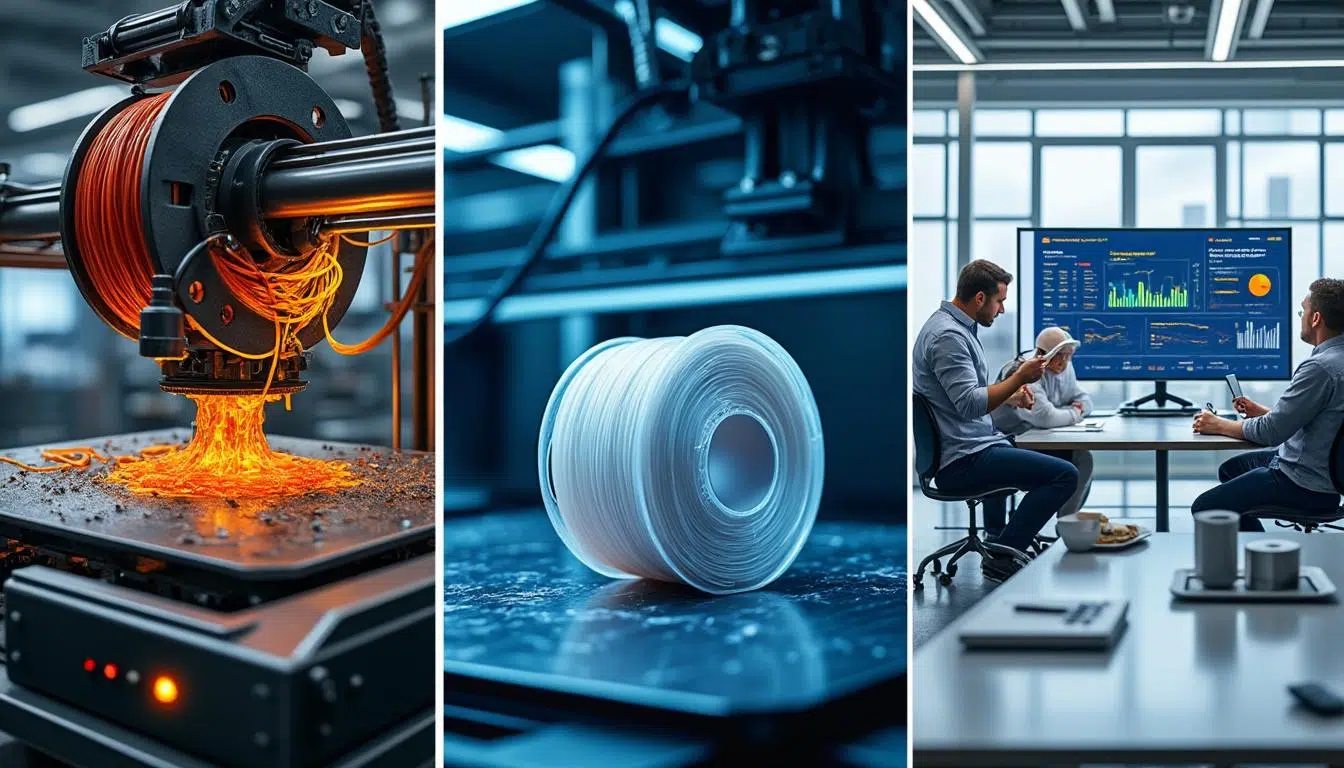
Additive manufacturing — commonly known as 3D printing — has captured the imagination of engineers, designers, and industrial strategists for decades, promising a future in which complex parts can be produced on demand, without tooling, with minimal waste, and in configurations that traditional subtractive manufacturing cannot achieve. That future is closer than it has ever been. The technology has matured significantly, with industrial-grade metal, polymer, and composite printers now capable of producing components that meet aerospace, medical, and automotive specifications. Yet despite these advances, the large-scale adoption of 3D printing in mainstream industrial production remains more limited than early predictions suggested. Three fundamental challenges continue to define the gap between 3D printing's potential and its present reality.
Understanding the Economic Barriers of 3D Printing in Industry
The first and most immediately tangible challenge is economic. While 3D printing offers compelling advantages for customisation, small-batch production, and the manufacture of geometrically complex components that would be prohibitively expensive to produce through conventional means, the high initial costs associated with acquiring the advanced equipment necessary for large-scale industrial production remain a significant barrier for many organisations. Industrial-grade metal additive manufacturing systems, for example, can cost several hundred thousand to several million euros — investments that require careful justification against the projected benefits of the technology.
Material costs compound this challenge. The specialised powders, composite filaments, and photopolymer resins required for high-performance industrial 3D printing are substantially more expensive than the raw materials used in conventional manufacturing, reflecting the demanding specifications and production processes required to ensure consistent particle size, purity, and performance. Process optimisation through sustained R&D investment and the development of automation capabilities can reduce per-part costs as production scales, but reaching the cost breakeven point relative to conventional manufacturing typically requires significant upfront commitment. Strategic capital investment — analogous to the large-scale bets that semiconductor and advanced materials sectors regularly make on transformative technologies — remains essential to driving down the cost curve and making industrial 3D printing accessible to a broader range of manufacturers.
Ensuring Quality and Standardisation in Industrial 3D Printing
The second major challenge is quality assurance and standardisation. In sectors such as aerospace, medical devices, and automotive safety systems, ensuring consistent quality that meets established industrial standards is not merely a commercial requirement but a legal and safety imperative. The certification and qualification of 3D-printed components for critical applications requires demonstrating — through extensive testing and statistical process control — that parts produced through additive manufacturing meet or exceed the performance specifications of their conventionally manufactured counterparts, batch after batch.
This is particularly challenging because 3D printing processes are sensitive to a range of variables — machine calibration, material batch consistency, ambient conditions, and post-processing procedures — that can affect the mechanical properties of finished parts in ways that are not always easily predicted or controlled. The establishment of strict quality control protocols, regular machine calibration programmes, and comprehensive staff training in best practices is essential for organisations seeking to use 3D printing in regulated manufacturing environments. Integration of quality management systems capable of real-time process monitoring — tracking temperature profiles, deposition rates, and layer adhesion during printing — is increasingly available and represents a critical enabler for consistent quality at scale. Collaboration between manufacturers, academic institutions, and standardisation bodies to develop industry-specific standards for additive manufacturing processes and materials is an ongoing effort that will significantly shape the pace at which 3D printing can be adopted in regulated industrial sectors.
Integrating 3D Printing into Existing Industrial Processes
The third challenge is perhaps the most complex because it is organisational as much as technical: seamlessly integrating additive manufacturing into existing industrial workflows, ERP systems, and production cultures that were built around fundamentally different manufacturing paradigms. Traditional production planning, inventory management, and quality assurance systems are designed around the logic of subtractive manufacturing — where raw material is machined, cut, or formed into shape — and adapting these systems to accommodate the different material flows, lead times, and process parameters of additive manufacturing requires significant effort and investment.
Machine connectivity and interoperability with existing ERP and MES (Manufacturing Execution System) platforms are key requirements for effective integration, enabling 3D printing operations to be scheduled, monitored, and managed within the same digital infrastructure as conventional production. Human resource adaptation is equally important: the workforce skills required to operate, maintain, and optimise industrial 3D printing systems are distinct from those needed for conventional manufacturing, and continuous training programmes are necessary to build and sustain these capabilities within production organisations. Government incentives and institutional support — in the form of grants for technology adoption, tax benefits for qualifying investments, and publicly funded research partnerships — can play a meaningful role in facilitating this integration, particularly for SMEs that lack the internal resources to manage a complex technology transition independently. The organisations that navigate these three challenges most effectively will be those best positioned to capture the full competitive advantage that additive manufacturing offers — and to shape the industrial landscape of the decades ahead.